
Signals
Shipping victory to the enemy: F-35 parts and the supply chain problem
F-35 components were misrouted to Hong Kong and seized by China. Officials call the parts low risk, but the greater warning is about the arms transfer network that carried them.
By Tanmay Rai, ·
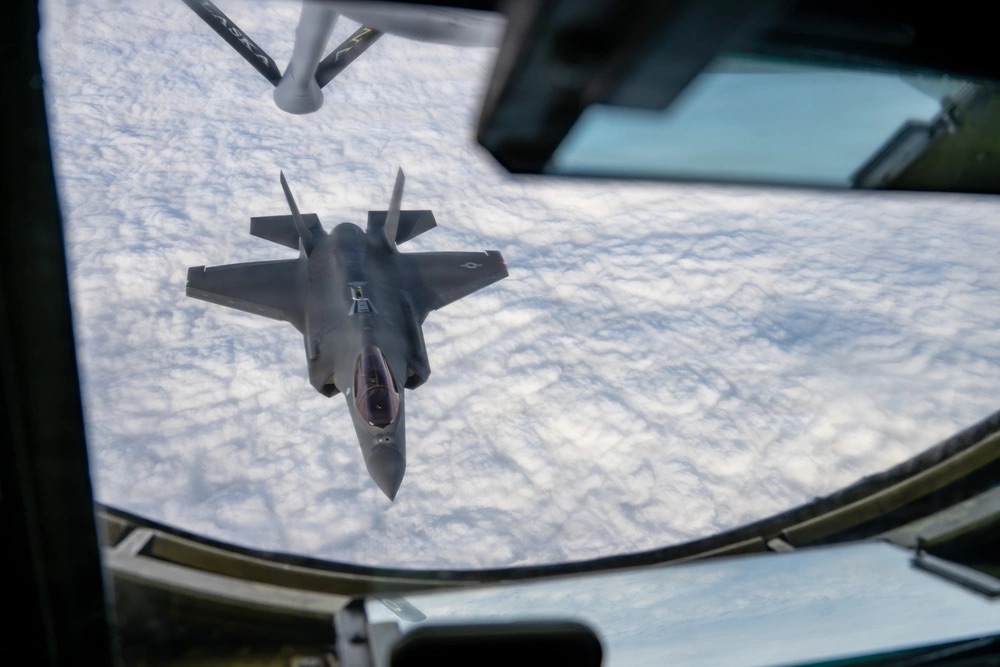
Since the beginning of warfare, adversarial militaries have often used all means necessary to gain insight into the weapons of their would-be enemies. For most, gaining access to this intelligence meant facing great adversity, bypassing security, and risking great cost and peril. It is exceedingly rare for valuable military intelligence to be mailed right to an enemy's doorstep. Yet, with little exaggeration, that is exactly what occurred just this May.
As recent reporting has now revealed, a shipment consisting of components of the United States' premier F-35 joint strike fighter, widely considered the world's most advanced jet fighter thanks to its stealth technology, was erroneously shipped to Hong Kong from Australia. Initially intended to reach the United States for unconfirmed reasons, an F-35 canopy and weapons bay door were accidentally routed to Hong Kong, from where the Chinese Government seized the parts. The disclosure of this incident, given its immense military implications, has spurred significant backlash from Congress ranging from investigations to statements denouncing the costly mistake as greatly endangering national security amidst intense geopolitical and military competition with Beijing.
Officials from the Australian and American governments, as well as Lockheed Martin, the F-35's manufacturer, have been quick to try to reassure the public by stating that the parts were not "sensitive" and were deemed to have a "low risk of exploitation". Yet, experts warn that the stealth coating and materials covering the components, key to the unique and deadly low radar signature of the aircraft, could enable China to study, reverse-engineer, and even reproduce the technology. If true, that would degrade the effectiveness of the F-35's stealth properties and therefore reduce its survivability and ability to operate in contested airspace by improving an adversary's ability to detect and engage the aircraft. This would directly undermine the technological edge of over 1,200 F-35s fielded by America and 19 of its allies who increasingly rely on the jet to present a credible deterrent to their adversaries.
Worryingly, this is not the first instance of the F-35's components becoming unaccounted for. According to a report from the Government Accountability Office, the 1.7 trillion dollar strike fighter program has seen over a million parts of the jet become "lost". Yet, considering the intensive and persistent efforts of China to gain access to and intelligence on the program in recent years, this emerges as potentially the most direct physical insight it has ever gained into one of the most advanced systems in Washington's arsenal, if not in the entire world.
For the Pentagon, even if it can convince the public that the F-35 isn't now compromised, it now must convince itself that its logistical supply chains are secure. The shipment of any military components to an adversarial state represents not only an unfortunate mistake, but a stark warning that America's web of global arms transfers opens its own supply chains to greater risks of error and possible manipulation by adversaries.
For China, access to America's most advanced stealth technology is perhaps nothing short of a godsend. For Washington, the implications of this incident have the potential to be disastrous. Yet, the even greater mistake would be for America to now fail to secure its supply lines, for doing so risks shipping victory into the hands of the enemy.